
Searching Williamson County Criminal Dockets
The county's own Williamson TnCIS search reaches both Circuit Court and General Sessions Criminal records. Pick one office or both. Then select Criminal and enter a full first and last name, since a full name works far better than a partial one. Adding the case year, or the digits after the final hyphen, narrows things down. Be careful, though. The portal applies every filter together, so one wrong year can bury a valid match. Find Now will not respond until the Turnstile check finishes.
Online is only one channel. Debbie McMillan Barrett's Circuit Court Clerk's Office holds the actual files. It keeps both Circuit and General Sessions criminal records. Ask at the counter or by phone. You can request a filed case, a hearing date, a docket sheet, or a certified copy. A precise written request should name the court and the division. Add the case number. Name the record you want. Tennessee Public Case History serves appellate matters only. It is not a second statewide trial-court docket search.
- Choose Circuit Court, General Sessions Criminal, or both.
- Select Criminal and enter a full party name or case reference.
- Add the case year or number when the first search is broad.
- Complete Turnstile, search, and filter the visible results.
- Ask the Circuit Court Clerk for certified or nonpublicly imaged records.
Williamson Criminal Search Fields
The county form rewards precision. Party Name also takes a legacy case reference, and Case Number takes just the numeric portion of a formatted number. Only the first ten query words count. Quoted phrases help. Broad searches stop at 2,500 rows. Choosing the correct criminal office usually beats piling on vague terms.
| Field | Use | Limit |
|---|---|---|
| Party Name | Full name or case reference | 100 characters |
| Case Year | Original filing year | Four characters |
| Case Number | Numeric suffix | Digits after final hyphen |
| Court office | Circuit or General Sessions | One required |
The blank official search form shows the county choices without exposing private party data.
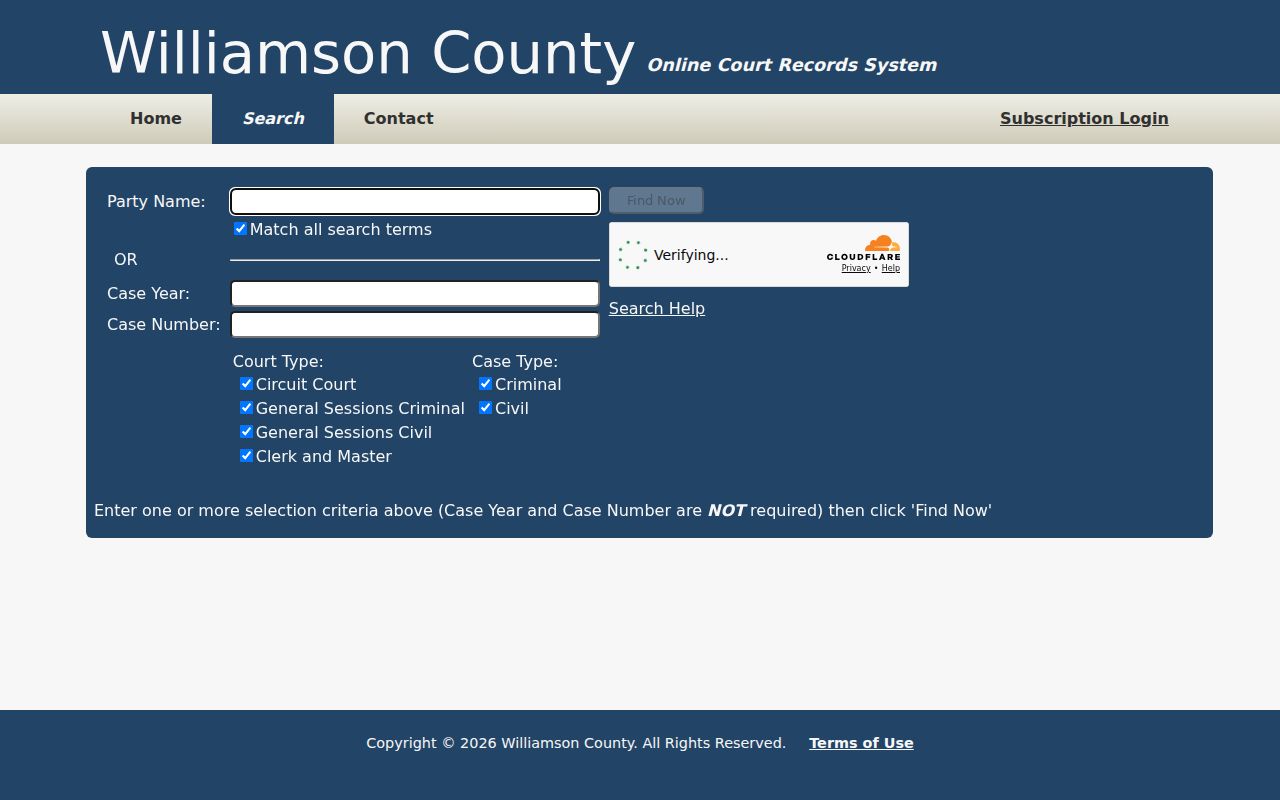
One boundary stands out on the county form: city courts and Juvenile Court are absent from the county-office choices.
Inside a Williamson County Criminal Docket
A public result tells you plenty. It can show the court office and the criminal case type. The year and number appear too. So does the matching party or reference. From there, a docket history may list filings and settings, while a weekly calendar adds the date, judge, courtroom, time, matter, clerk, and court officer. Treat both as summaries. The docket entry does not replace the case file, and a setting label never reveals what happened at the hearing.
| Case identifier | A number may look like 99GS1-2023-CR-12345; TnCIS directs users to enter only 12345 in Case Number. |
|---|---|
| Instrument | A warrant, criminal summons, or indictment tied to the matter. |
| Setting | Arraignment, preliminary hearing, motion, pretrial conference, or trial. |
| Disposition | A recorded outcome such as dismissal, plea, diversion, trial result, transfer, or remand. |
| Clerk entry | A filed document or procedural event maintained by the clerk. |
Read every entry in context. An indictment is a charge, a preliminary hearing tests probable cause, and a continuance simply moves a setting; none of these, on its own, states the final outcome.
Williamson Criminal Divisions I-IV
Williamson County belongs to Tennessee's 21st Judicial District. The official Circuit Court Judges page lists Divisions I through IV, along with criminal Part I and Part II assignments. That detail helps you tie a docket entry to the right judge and courtroom calendar.
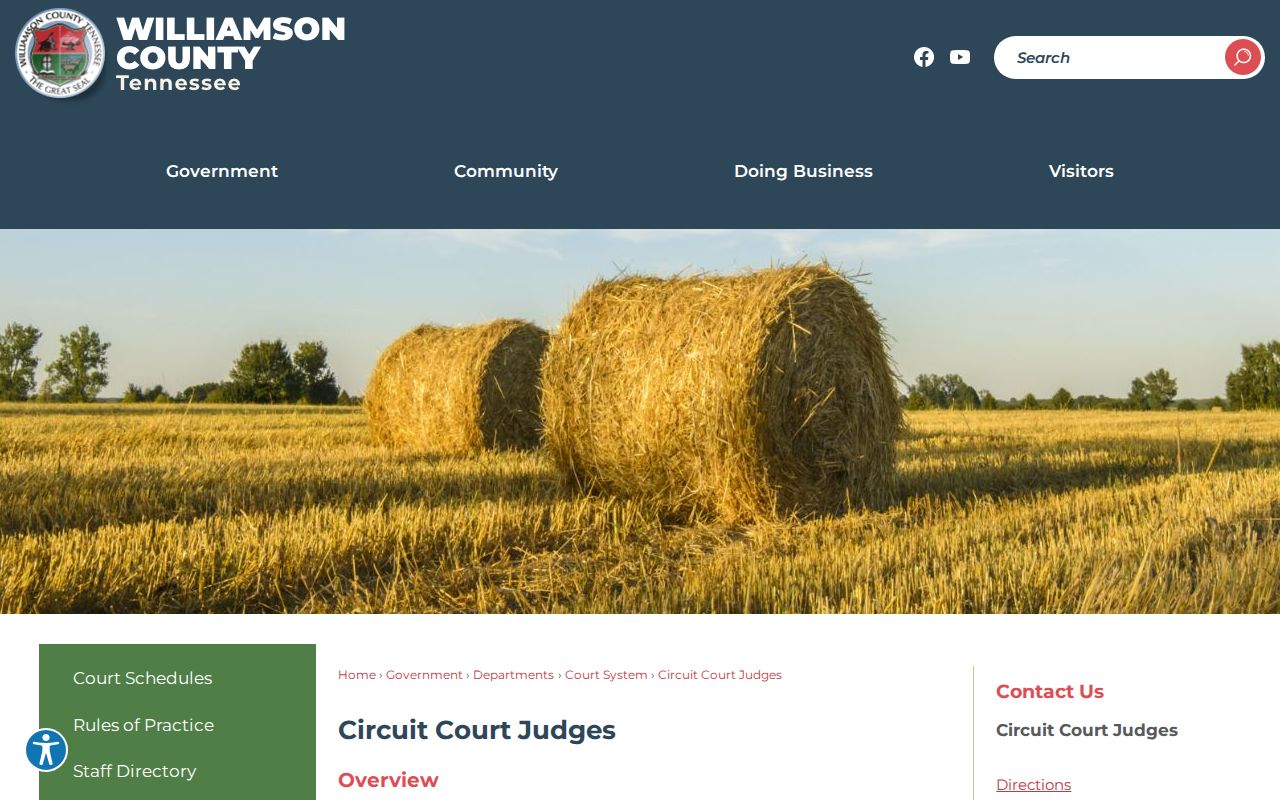
Assignments shift, so trust the official page over old orders. A judge's name on a stale document is not proof of a current assignment.
The two levels split the work. General Sessions Criminal handles warrants and early appearances. It also takes preliminary matters and lower criminal cases. Circuit Criminal is different. It takes indictments, felony trials, specified appeals, and juvenile transfers. One case can therefore leave entries at both court levels.
How a Criminal Case Moves
A case usually starts with a warrant, a summons, or an arrest process. Magistrates then handle initial appearances, probable-cause warrants, bonds, and certain emergency orders. They do not docket cases. They do not move dates or accept payments. For filed General Sessions and Circuit matters, the Circuit Court Clerk is the office to call.
Docket flow: Warrant or Summons › Initial Appearance › Preliminary Hearing or Grand Jury › Arraignment › Pretrial › Plea or Trial › Disposition › Sentencing
Cases skip steps all the time. An appeal from a lower court can open a fresh Circuit proceeding. Appeals after Circuit Court travel the Tennessee Court of Criminal Appeals route, which sits outside Williamson TnCIS.
- Arraignment
- An appearance where charges are addressed and later procedure may be set.
- Nolle prosequi
- A prosecution dismissal category, not a conviction.
- Scire facias
- A notice or order process used in some failure-to-appear or bond matters.
- Pretrial diversion
- A disposition category that should not be recast as an acquittal.
Williamson Criminal Calendar Labels
Recurring settings appear on the county's Court Schedules page. The official material names bond dockets, preliminary hearings, jail dockets, arraignments, criminal motions, trials, and Drug Court Conferences. Each label describes a session's purpose. It says nothing about what happened in any single case.
Take the labels at face value. "Jail Docket" is not an inmate roster. "Criminal Trial" means a case was set, not that a conviction followed. "Drug Court Conference" marks program activity, not a public participant report. If an appearance is required, confirm a changed setting with the clerk.
Note: a calendar schedules court activity. The docket sheet and the filed orders supply the case-specific procedural history.
Courts That Hold Criminal Dockets
Let the caption and the issuing court set your route. Williamson TnCIS carries Circuit and General Sessions Criminal. Municipal matters from Franklin, Spring Hill, Brentwood, Nolensville, and Fairview run through city channels. When a citation names its court, trust that court over the issuing agency alone.
Juvenile matters sit with a different clerk. Access rules there are distinct too. Federal cases belong to the Middle District of Tennessee and PACER, not to Williamson TnCIS. The county Court System map lays out local jurisdiction.
| Court | Typical work | Custodian |
|---|---|---|
| General Sessions Criminal | Warrants and preliminary matters | Circuit Court Clerk |
| Circuit Criminal | Indictments and felony trials | Circuit Court Clerk |
| Municipal | City citations and ordinances | City court clerk |
| Juvenile | Statutory juvenile matters | Juvenile Court Clerk |
Williamson Criminal Docket Counts
The Tennessee Administrative Office of the Courts counted 3,068 Williamson criminal filings or counts and 3,341 dispositions or counts in fiscal year 2024-25. Drug cases led the filing categories at 534, followed by other motor vehicle at 407, burglary or theft at 374, probation violations at 298, DUI at 224, and assault at 221. Read these as report categories. They are not a live inventory, a unique-case count, or a count of defendants.
The table lumps together pleas, dismissals, diversion, transfers, trial verdicts, and acquittals. It cannot tell you how any one case ended. Only the individual docket can do that. The filed orders in the clerk's court records carry that answer. A gap between filings and dispositions does not prove the Williamson County criminal docket grew or shrank. A disposition logged in one fiscal year may resolve a count filed in an earlier one. A single case can also carry several counts. Big category totals are not a forecast for any pending matter either. Read the report for county court context. Then read the clerk's docket for the true status of one case.
Sealed Dockets and Public Access
Tennessee Supreme Court Rule 34 gives the public the right to inspect court records. The law sets limits, though. Some material stays off limits. Sealed orders, confidential records, judicial work product, drafts, and internal deliberative papers may be withheld. So may anything whose release would impair court functions. And a missing docket entry proves nothing about dismissal, acquittal, expungement, or existence.
Access rule: Ask the originating clerk for the public portion of the docket and the basis for withheld material. State the court, case number, date range, and desired copy type.
County policy, resting on Tennessee Code Annotated section 10-7-503, lets you ask to inspect records in person or in writing, though copy requests must be written. Court records still route to the court custodian. Looking costs nothing under county policy. Copies and certification from the court may carry separate fees.
Williamson Juvenile Dockets Stay Separate
The Williamson Juvenile Court Services page lays out the court's separate jurisdiction and its own contact channels, and the Juvenile Court Clerk holds those records. Neither office shows up in the county TnCIS search.
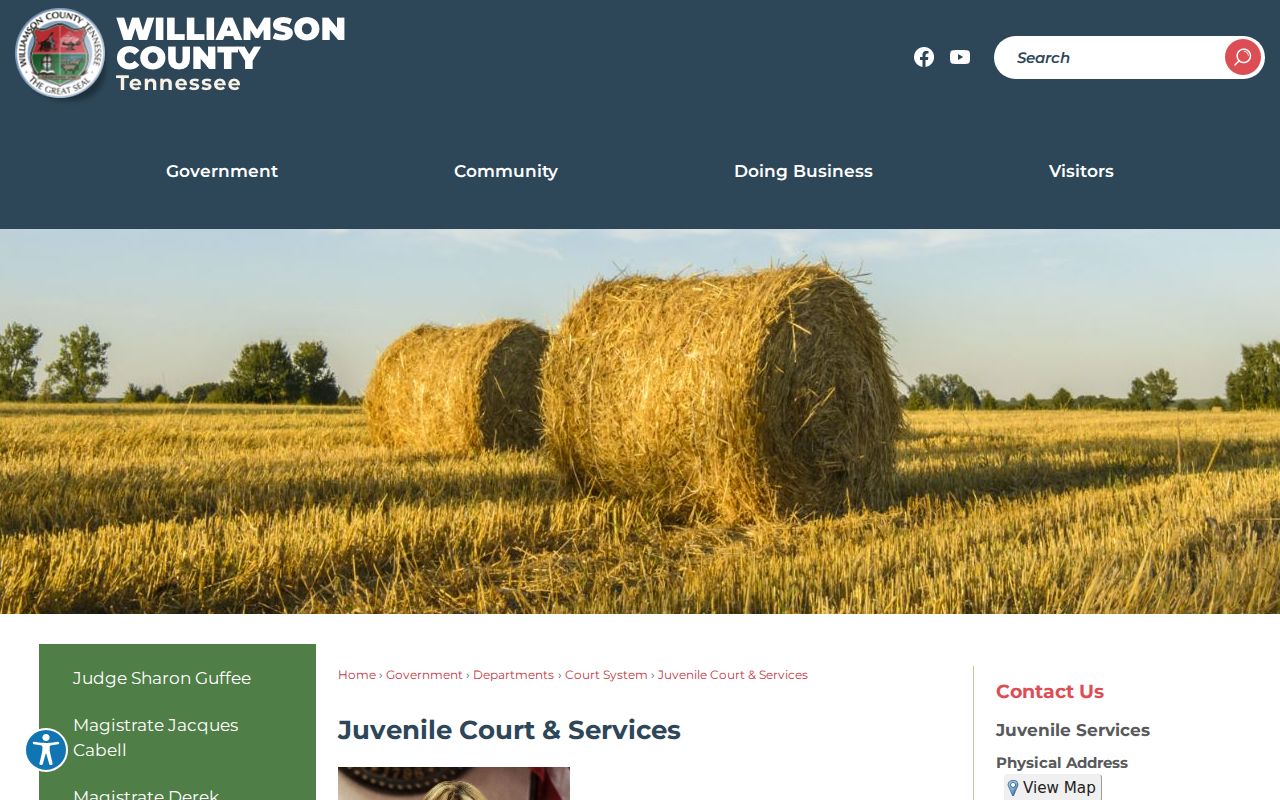
The separate route matters. Tennessee Juvenile and Family Courts Rule 114 keeps dependency and neglect proceedings confidential, while delinquent and unruly cases run under their own framework and a judge may close a hearing on particularized findings. Adult TnCIS is no substitute for a juvenile record.
The county offers no complete public warrant database. Filed cases can show up in TnCIS, but live warrant or custody status sits with a magistrate, jail, clerk, or police office. For anything time-sensitive, verify directly.